Have you ever stepped into a workplace and instantly sensed something was off — a potential danger, a hidden hazard — while others walked by like nothing was wrong? It’s not a sixth sense. And it’s not just experience.
It’s how we perceive risk.
Risk perception is one of the most underrated factors in workplace safety — yet it influences every decision, every action, and every outcome.
In this blog (and in my recent video), I’ll walk you through how risk perception shapes behavior, why some people overlook hazards, and most importantly — how to transform the way your team thinks about safety.
Everyone Sees Risk Differently
Risk exists — but how we perceive risk determines what we do next.
Imagine this:
- A health and safety professional walks in — eyes scanning fast, spotting fire hazards, blocked exits, open edges.
- A supervisor arrives, thinking, Will we finish on time? Do we have enough manpower?
- A worker enters focused on finishing fast, beating the heat, or catching the last bus home.
Same environment. Three people. Three different risk radars.
Why? Because risk perception varies by role, experience, and mindset — not intelligence.
This is crucial:
Risk perception is how we interpret and respond to danger — and it shapes every action we take.
Beliefs Drive Risk Perception
Want to know the real driver of risk perception?
Belief systems.

Have you heard these before?
- “I’ve done this for 10 years — nothing’s ever happened.”
- “This has to be done today — no matter what.”
- “Everyone else skips PPE — I’ll be fine too.”
These beliefs are shaped by culture, habits, and repetition. But feeling safe ≠ being safe.
That’s why rules alone don’t work.
If you want to change risk behavior, you have to reshape risk beliefs.
A Real Story: When Routine Became Risky
Let me share a true incident — I also describe it in my video.
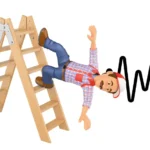
My friend Ravi, an electrician, was told to install a ceiling light. The proper scaffold wasn’t ready. But there was a mobile one nearby — missing steps, no toe boards, wheels unlocked.
He rushed. Climbed up with tools in one hand. Halfway through, the scaffold shifted.
Crash.
He fell. Fractured his elbow and shoulder. Two months off work.
Was Ravi careless? No.
His belief system said:
“It’ll just take two minutes. I’ve done this before. I’ll be fine.”
Familiarity made it feel safe — and that’s where the real danger lies.
Why Changing Risk Perception Is So Hard
Workers don’t take risks because they want to get hurt.
They take risks because they’ve convinced themselves it’s not a big deal.
These beliefs come from:
- How safety is talked about
- What supervisors tolerate
- Whether people feel safe speaking up
Shouting rules doesn’t change behavior — reshaping beliefs does.
Why Changing Risk Perception Is So Hard
Workers don’t take risks because they want to get hurt.
They take risks because they’ve convinced themselves it’s not a big deal.
These beliefs come from:
- How safety is talked about
- What supervisors tolerate
- Whether people feel safe speaking up
Shouting rules doesn’t change behavior — reshaping beliefs does.
5 Powerful Ways to Improve Risk Perception
1. Lead by Example
Let your leaders walk the talk.
When managers and supervisors follow safety rules, employees see that safety is a priority.
According to Social Cognitive Theory, people don’t just learn from rules — they learn by observing others, especially those they see as role models, like supervisors and managers.
This process is called observational learning.
It means:
- We watch what other do,
- We notice the results of their action
- We form beliefs about what’s right, safe, or expected from us too.
So, when a supervisor:
Wears PPE properly,
Stops unsafe work immediately,
Participates in risk assessments,
Takes time to report near misses, workers are likely to follow the same behaviors. Because they see that safety isn’t just told, it’s lived.
So remember:
Every time a leader follows the rules, they’re not just being compliant —
They’re training minds, shaping culture, and preventing accidents.
2. Communicate Clearly and Often
One of the most effective ways to show that safety truly matters is through clear and consistent communication.
Facetoface communication. Toolbox talks. Notice boards. Newsletters. Digital updates.
When employees have regular access to safety procedures, shift instructions, and updates on incidents — whether through notice boards, digital systems, toolbox talks or newsletters — it sends a powerful message:
Safety isn’t just a rule — it’s a priority.
The more visible and consistent your safety messaging, the more it becomes part of daily thinking.
3. Recognize Positive Behavior
Don’t only point out what’s wrong — appreciate when someone does something right. Recognizing safe behavior is just as important as correcting unsafe ones.
When you recognize good behavior:
People feel valued
They’re more likely to repeat it
Others start following their example
It’s basic human nature — we repeat what gets noticed and appreciated.
So next time you see someone doing the right thing…
Say it. Show it. Encourage it.
4. Involve Employees
Let workers take part in risk assessments and decision-making.
When workers participate in hazard identification, safety audits, or workplace inspections, they start seeing safety as something they are responsible for — not something that’s just enforced from above.
This builds:
- Awareness of hidden risks
- Ownership of safety practices
- Buy-in on control measures
- Reduces the chances of risky behavior because they now understand the “why” the controls are behind.
Remember, Engaged employees become safety ambassadors.
5. Build a Speak-Up Culture
There shall be a psychologically safe workplace environment. Leadership must ensure that the workplace allows people to speak up without fear.
If workers are afraid of being blamed, punished, or ridiculed, they will hide mistakes — even when they know a risk is present.
But in a non-punitive safety culture, people feel safe to:
- Report near misses
- Suggest improvements
- Stop unsafe work and
- Intervene when a coworker is at risk
Remember, a blame-free approach backed by leadership leads to better safety outcomes.
Final Word: Risk Is a Belief System
Now, it’s the time to ask yourself:
- Do your workers rush through risk to hit deadlines?
- Or do they pause, assess, and act safely — even if it takes longer?
Because what you believe about risk shapes what you do.
So let’s shift the mindset. Rethink risk. Rebuild beliefs. Rewire actions.
Watch my full video on Risk Perception here for deeper insights and real-life examples